WELCOME

WELCOMEWELCOMEWELCOME
  • Sign In

  • My Account
  • Signed in as:

  • filler@godaddy.com


  • My Account
  • Sign out

  • Home
  • Consultations
  • Raw Milk Sales By State
    • Alabama
    • Alaska
    • Arizona
    • Arkansas
    • California
  • All About PMA's
    • Understanding a PMA
    • Herd-shares Vs PMA's
    • Setting up Your Trust
  • Dairy Cows & More
    • Buying Your 1st Cow
    • Starting a Micro Dairy
    • Recommendations
    • Milk Testing 101
  • Make a Donation
  • Chicken Resources
  • Agritourism Waiver
  • Diclaimer's MUST READ
  • More
    • Home
    • Consultations
    • Raw Milk Sales By State
      • Alabama
      • Alaska
      • Arizona
      • Arkansas
      • California
    • All About PMA's
      • Understanding a PMA
      • Herd-shares Vs PMA's
      • Setting up Your Trust
    • Dairy Cows & More
      • Buying Your 1st Cow
      • Starting a Micro Dairy
      • Recommendations
      • Milk Testing 101
    • Make a Donation
    • Chicken Resources
    • Agritourism Waiver
    • Diclaimer's MUST READ

WELCOME

WELCOMEWELCOMEWELCOME

Signed in as:

filler@godaddy.com

  • Home
  • Consultations
  • Raw Milk Sales By State
    • Alabama
    • Alaska
    • Arizona
    • Arkansas
    • California
  • All About PMA's
    • Understanding a PMA
    • Herd-shares Vs PMA's
    • Setting up Your Trust
  • Dairy Cows & More
    • Buying Your 1st Cow
    • Starting a Micro Dairy
    • Recommendations
    • Milk Testing 101
  • Make a Donation
  • Chicken Resources
  • Agritourism Waiver
  • Diclaimer's MUST READ

Account


  • My Account
  • Sign out


  • Sign In
  • My Account

Cinnamon (Cinnamomum verum)
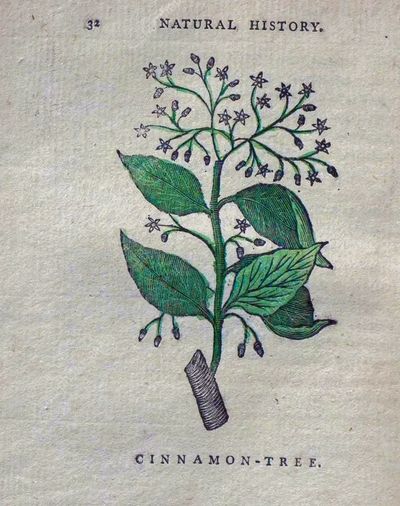
Illustration of a cinnamon tree with leaves and flowers from an old natural history book.

History:

True cinnamon (Cinnamomum verum), a member of the Laurel family, comes from the bark of an evergreen tree native to the West Indies, particularly found in Sri Lanka and South India. The aromatic spice is harvested from the inner bark of cinnamon trees. Commercial cinnamon is produced by cutting the tree branches close to the ground, encouraging new shoots to grow from the roots.

Cassia (Cinnamomum aromaticum), which is commonly used in North America, comes from the cassia tree grown in countries like Vietnam, China, Indonesia, and Central America. Cassia has a slightly sweeter and more astringent flavor compared to true cinnamon.

Cinnamon's history dates back to 2700 B.C.E., when it was first mentioned by the Chinese emperor Shen Nung, who was an advocate of agriculture. By 2000 B.C.E., the Egyptians were importing it from China, using it in embalming. Ancient cultures of the Near East regarded cinnamon as sacred, with its use mentioned in the Hebrew Bible for anointing oils. The Romans burned it at funerals, while Europeans once used it to mask the taste of spoiled meat. In Ayurvedic medicine, cinnamon has long been used to strengthen circulation, relieve pain, aid digestion, alleviate cold and flu symptoms, and enhance the absorption of other medicines—making it a "universal medicine."

How it helps:

Take a guided tour of our farm and learn about sustainable agriculture. You'll see firsthand how we grow our produce and raise our animals, and you'll learn about the importance of small-scale farming. Our tours are great for families, school groups, and anyone who wants to learn more about where their food comes from.

Feeding

Join us for a farm-to-table dinner and experience the best of Hayes Valley Farms Farm. Our dinners feature locally-sourced ingredients and are prepared by our very own chefs. You'll enjoy a delicious meal in a beautiful outdoor setting, surrounded by the sights and sounds of our working farm.

References

Antibacterial Activity of Essential Oil of Cinnamon and Trans-cinnamaldehyde against Staphylococcus spp. Isolated from Clinical Mastitis of Cattle and Goats


Bactericidal effects of Cinnamon cassia oil against bovine mastitis bacterial pathogens


The Antimicrobial Effects of Cinnamon Bark Essential Oil on Three Species of Non-aureus Staphylococci Associated with the Bovine Udder and Teat Skin


In vitro methods of antimicrobial susceptibility produce different estimates of cinnamon bark oil minimum inhibitory concentration for Staphylococcus aureus isolates from organic dairy farms

CSA Shares

Sign up for a CSA share and receive a weekly delivery of fresh, organic produce from Hayes Valley Farms Farm. Our CSA shares are available seasonally and include a variety of fruits and vegetables. It's a great way to support local agriculture and eat healthy, delicious food.

Contact Us

Have questions about our farm stand or want to place an order? Contact us today and we'll be happy to help. You can reach us by phone, email, or by filling out the form on our website. We look forward to hearing from you!

  • Consultations
  • Understanding a PMA
  • Make a Donation
  • Agritourism Waiver
  • Diclaimer's MUST READ
  • Privacy Policy

Hayes Valley Farms

276-299-3747

Copyright © 2025 - HAYES VALLEY FARMS - All Rights Reserved.

Powered by

This website uses cookies.

We use cookies to analyze website traffic and optimize your website experience. By accepting our use of cookies, your data will be aggregated with all other user data.

Accept